Introduction
KMT2A-rearranged acute lymphoblastic leukemia (ALL) represents one of the most aggressive molecular subtypes of B-cell ALL (B-ALL) and is associated with adverse outcomes across age groups. Adult patients harboring the t(4;11)(q21;q23)/KMT2A::AFF1 rearrangement frequently present with hyperleukocytosis, extramedullary disease, persistent measurable residual disease (MRD), and an increased risk of relapse. Long-term survival remains unsatisfactory, particularly in elderly patients who are often ineligible for intensive treatment approaches or allogeneic hematopoietic stem cell transplantation (allo-HCT).1,2
CD38 is widely expressed in lymphoid malignancies and has emerged as a promising therapeutic target. Daratumumab, a human monoclonal antibody directed against CD38, has demonstrated substantial efficacy in multiple myeloma and has shown activity in acute leukemias, including relapsed or refractory ALL.3–5 However, clinical experience with daratumumab in KMT2A-rearranged B-ALL remains limited.
We report an elderly patient with CD38-high KMT2A::AFF1-positive B-ALL who achieved rapid MRD-negative and molecular remission after only two cycles of mini-hyper-CVD plus daratumumab and subsequently maintained treatment-free remission for more than 28 months following treatment discontinuation.
Case Presentation
A 72-year-old woman presented in August 2023 with progressive weakness, exertional dyspnea, and intermittent fever. Laboratory evaluation demonstrated marked hyperleukocytosis reaching 275 x 109/L, anemia, and thrombocytopenia. Physical examination and imaging studies revealed generalized peripheral lymphadenopathy up to 2 cm, mediastinal lymphadenopathy up to 1.3 cm, and splenomegaly.
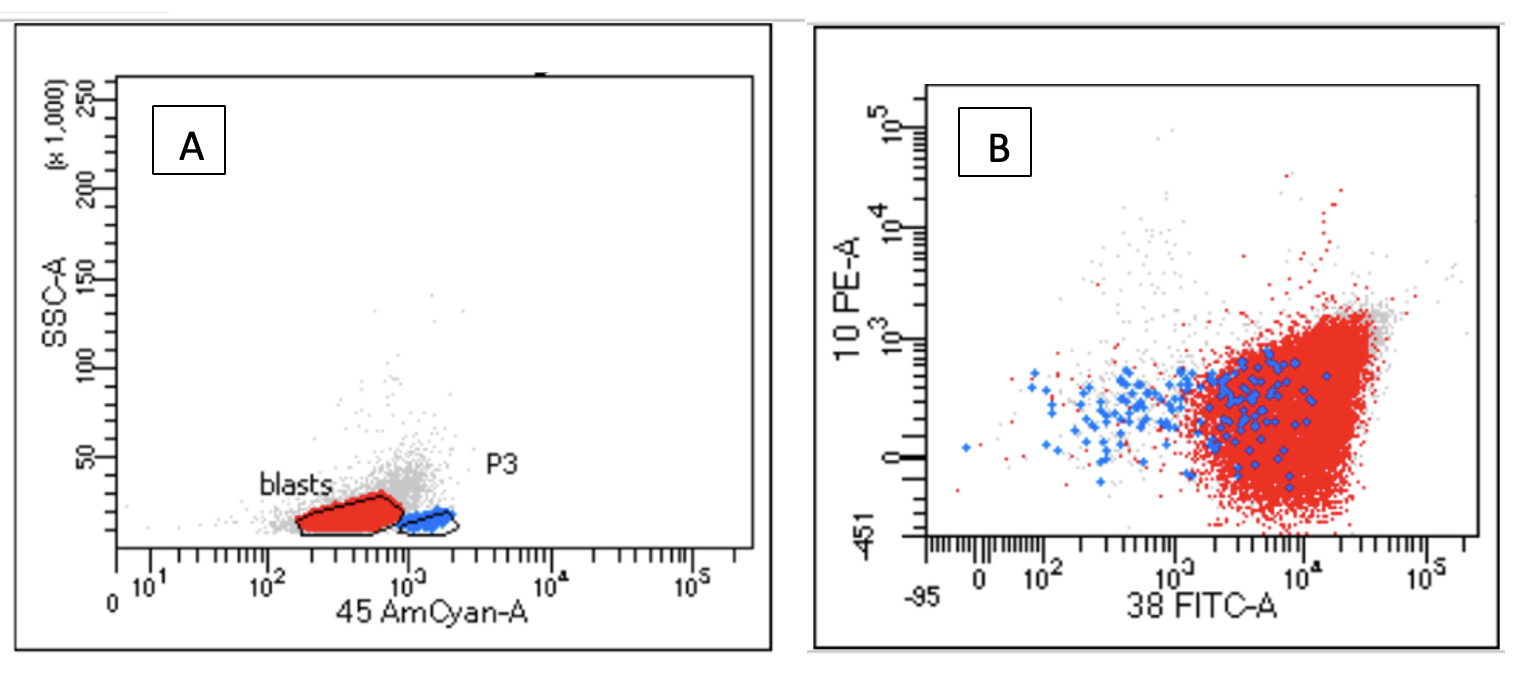
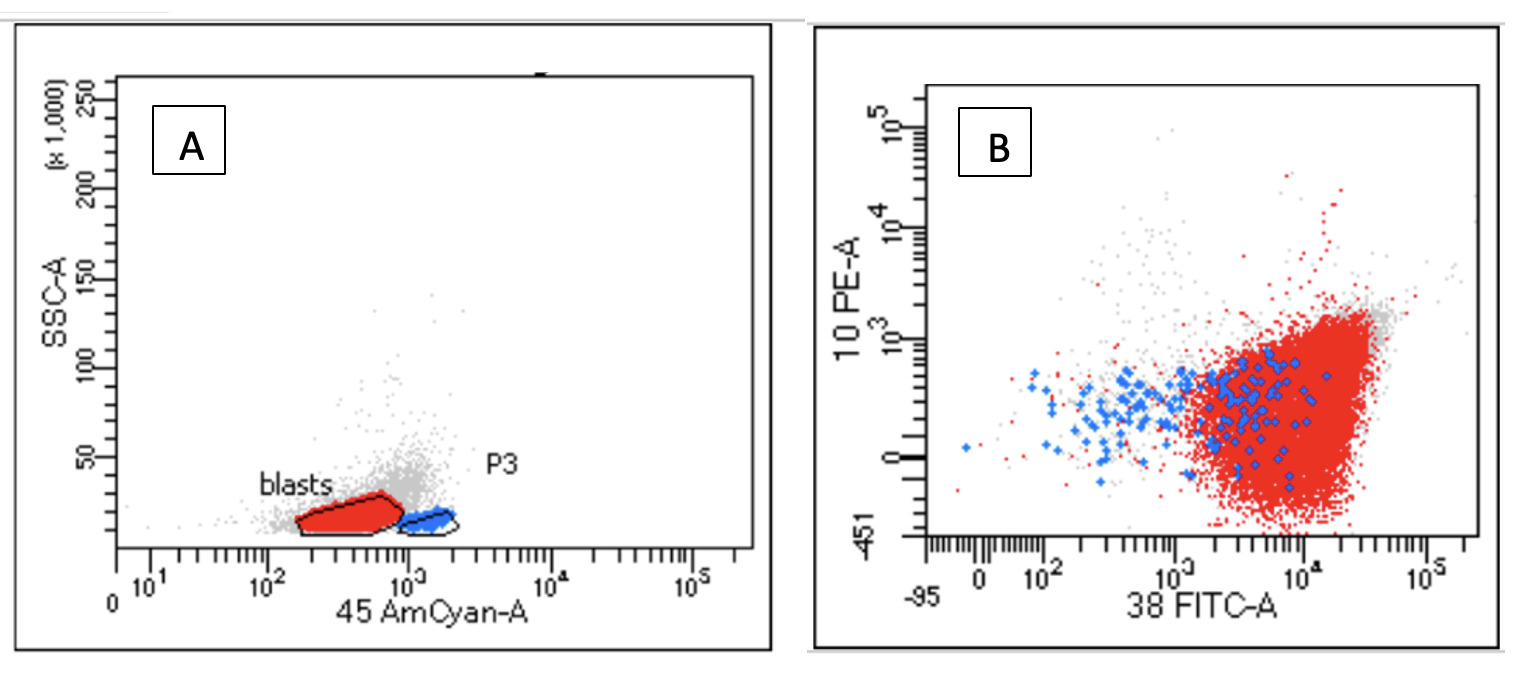
Bone marrow flow cytometry demonstrated a blast population comprising 84.4% of nucleated cells with an immunophenotype consistent with Pro-B acute lymphoblastic leukemia (B-I according to the EGIL classification): CD45dim/ SSClow/ CD19+/ CD38+/ CD34±/ CD10−/ CD20−/ CD22−/ cytCD79a+/ MPO−/ cytCD3−. CD38 expression was observed in approximately 99% of leukemic blasts (Figure 1).
Conventional cytogenetic analysis demonstrated 46,XX,t(4;11)(q21;q23)[11]. Fluorescence in situ hybridization and reverse-transcription polymerase chain reaction (RT-PCR) confirmed the presence of KMT2A::AFF1 rearrangement. BCR::ABL1 testing was negative. According to the 2022 World Health Organization classification, the diagnosis was B-lymphoblastic leukemia/lymphoma with KMT2A rearrangement.
Several adverse prognostic features were present at diagnosis, including advanced age, hyperleukocytosis, and KMT2A::AFF1 positivity, placing the patient in a high-risk category.
Treatment and Response
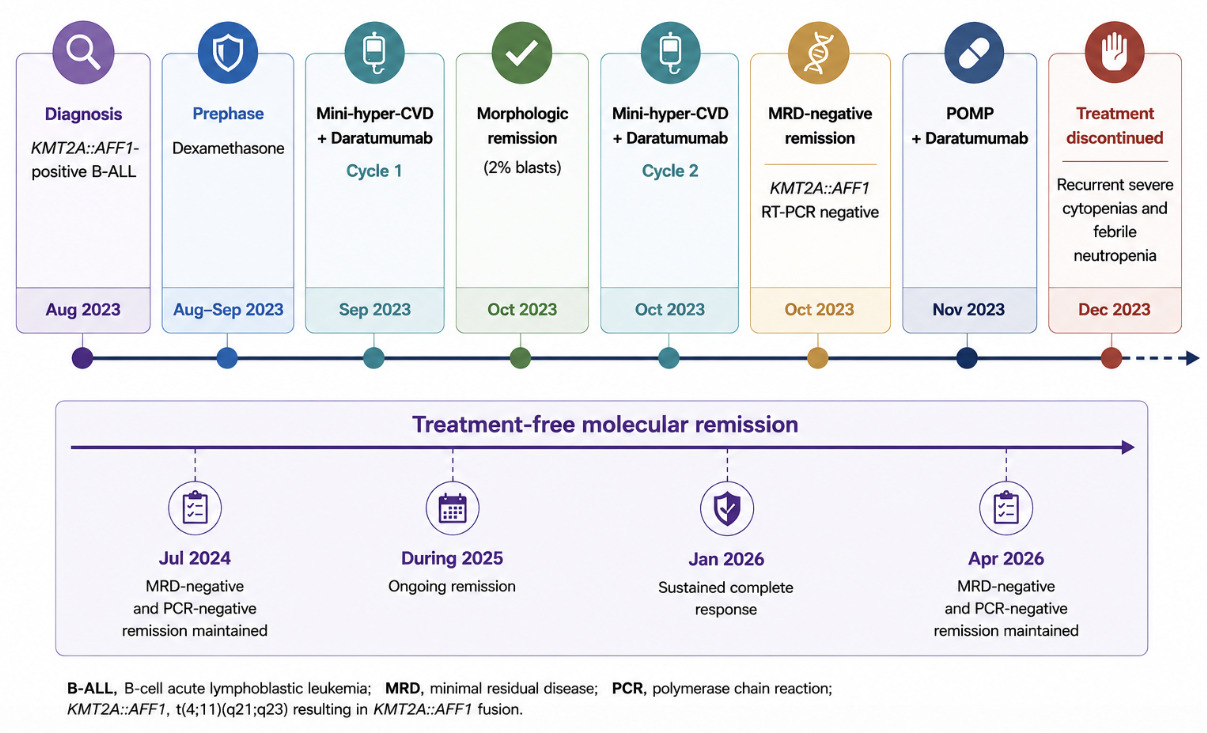
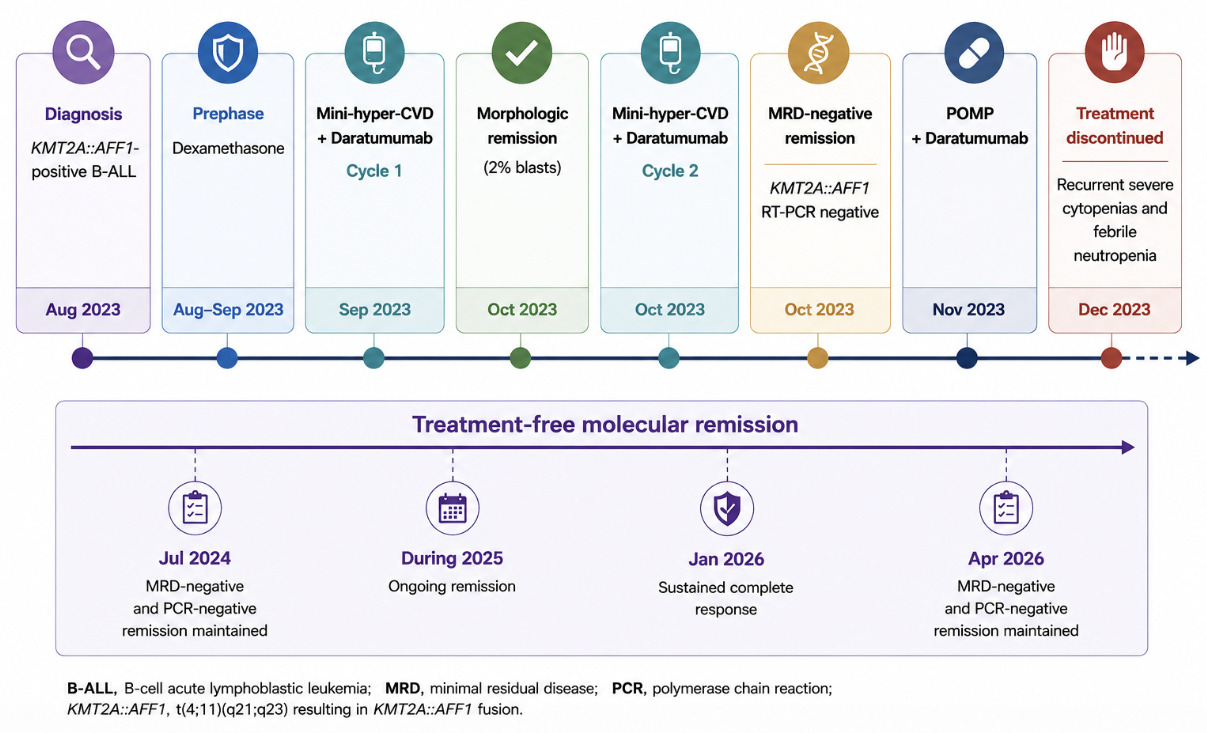
Initial cytoreduction was performed with hydroxyurea from August 26 to September 1, 2023, followed by a dexamethasone prephase from September 1 to September 5.
The patient subsequently received two cycles of mini-hyper-CVD with continuation of daratumumab. The first cycle was administered from September 6 to September 19, 2023. Central nervous system prophylaxis consisted of four intrathecal administrations of methotrexate (15 mg), cytarabine (30 mg), and dexamethasone (4 mg). Bone marrow assessment performed on October 4, 2023, demonstrated morphologic remission with 2% blasts. A second cycle of mini-hyper-CVD was administered in October 2023. Daratumumab was administered at 16 mg/kg as four weekly infusions during induction therapy.
Response assessment after the second cycle demonstrated only 1% marrow blasts. Multiparameter flow cytometry revealed MRD negativity with a sensitivity of 10-4. Simultaneously, RT-PCR became negative for KMT2A::AFF1, confirming achievement of molecular remission.
Following induction therapy, maintenance treatment was initiated with one cycle of POMP plus a single infusion of daratumumab (16 mg/kg on day 1), followed by one additional cycle of POMP without daratumumab.
Treatment Toxicity and Follow-Up
Treatment was complicated by infectious and hematologic toxicity throughout the treatment course. Infectious complications were already observed during induction with mini-hyper-CVD plus daratumumab; however, they became substantially more severe after transition to POMP maintenance. The patient developed persistent grade 3–4 cytopenias accompanied by prolonged agranulocytosis, recurrent febrile neutropenia, Streptococcus gallolyticus bacteremia, Escherichia coli bacteremia, oral candidiasis, and repeated hospitalizations.
Given the cumulative treatment-related toxicity, persistent severe cytopenias, and recurrent serious infections despite achievement of MRD-negative molecular remission, all antileukemic therapy was discontinued in December 2023.
Despite treatment cessation, serial evaluations demonstrated sustained remission. Bone marrow examinations repeatedly confirmed ongoing morphologic remission. MRD remained negative by multiparameter flow cytometry, and repeated molecular monitoring consistently demonstrated absence of detectable KMT2A::AFF1 transcripts.
In July 2024, both MRD assessment and molecular testing remained negative. Follow-up examinations performed during 2025 and 2026 continued to demonstrate sustained remission. The most recent bone marrow evaluation revealed 1.4% blasts without immunophenotypic evidence of residual leukemia. RT-PCR performed in April 2026 remained negative for KMT2A::AFF1.
At the latest follow-up, approximately 28 months after treatment discontinuation, the patient remained in treatment-free molecular remission without allogeneic transplantation, blinatumomab, inotuzumab ozogamicin, chimeric antigen receptor (CAR) T-cell therapy, or any additional antileukemic treatment.
Discussion
KMT2A::AFF1-positive B-ALL remains one of the most aggressive molecular subtypes of adult B-ALL and is associated with a high risk of relapse and poor long-term survival despite substantial advances in risk-adapted treatment, immunotherapy, and supportive care.1,2,6 Elderly patients represent a particularly challenging population because intensive chemotherapy, allogeneic hematopoietic stem cell transplantation, and other consolidation strategies are frequently precluded by age, comorbidities, or treatment-related toxicity.
Several features make this case noteworthy. The leukemic blasts exhibited exceptionally high CD38 expression (99%), providing a strong biological rationale for anti-CD38-directed therapy. Deep remission was achieved after two cycles of mini-hyper-CVD combined with daratumumab, with both MRD negativity by multiparameter flow cytometry and molecular remission by RT-PCR documented within approximately two months of treatment initiation. MRD negativity has consistently been shown to be one of the strongest predictors of long-term outcome in adult ALL.7
The most remarkable finding, however, was the durability of response following treatment discontinuation. Because of recurrent grade 3–4 cytopenias and severe infectious complications, all antileukemic therapy was discontinued in December 2023. Nevertheless, the patient has maintained both MRD-negative and RT-PCR-negative remission for approximately 28 months thereafter.
KMT2A::AFF1-positive ALL is characterized by aggressive disease biology and a high incidence of MRD persistence despite morphologic remission. Consequently, serial MRD assessment has become an essential component of disease monitoring in this molecular subgroup. Unlike many other forms of B-ALL, KMT2A fusion transcripts constitute leukemia-specific molecular targets that can be quantitatively monitored using reverse-transcription quantitative polymerase chain reaction. Several studies have demonstrated that persistence or molecular re-emergence of KMT2A::AFF1 transcripts during follow-up is strongly associated with subsequent hematologic relapse, whereas sustained molecular negativity identifies patients achieving deep and durable treatment responses. In our patient, durable remission was confirmed by two complementary methods—multiparameter flow cytometry and serial RT-PCR—which remained negative throughout follow-up until April 2026, providing robust evidence of sustained molecular remission.8
Recent therapeutic advances have focused on pharmacologic disruption of the menin-KMT2A interaction, a critical mechanism underlying leukemogenesis in KMT2A-rearranged acute leukemias. Menin inhibition suppresses aberrant HOXA and MEIS1 transcription induced by KMT2A fusion proteins and has emerged as one of the most promising targeted therapeutic strategies for this molecular subgroup. Revumenib, the first clinically approved menin inhibitor, demonstrated encouraging efficacy in patients with relapsed or refractory KMT2A-rearranged acute leukemias in the AUGMENT-101 trial, with many responders also achieving MRD clearance. Other menin inhibitors, including ziftomenib, are currently undergoing clinical evaluation. Although these agents are expected to substantially expand treatment options, access remains limited in many healthcare systems, including our region. Consequently, optimization of currently available treatment strategies remains particularly relevant, especially for elderly patients who are frequently ineligible for intensive chemotherapy or allogeneic hematopoietic stem cell transplantation.9
Although no clinical data are currently available regarding the combination of menin inhibitors with anti-CD38 monoclonal antibodies in KMT2A::AFF1-positive B-ALL, this strategy represents a biologically attractive therapeutic approach. Menin inhibitors disrupt the menin–KMT2A interaction, thereby suppressing the leukemogenic transcriptional program driven by KMT2A rearrangements, whereas daratumumab mediates immune-dependent elimination of CD38-expressing leukemic blasts through complementary mechanisms, including antibody-dependent cellular cytotoxicity, antibody-dependent cellular phagocytosis, complement-dependent cytotoxicity, and direct induction of apoptosis. Given these distinct but potentially synergistic mechanisms of action, their combination could theoretically deepen treatment responses and facilitate eradication of MRD. Whether this approach may improve outcomes in patients with CD38-high KMT2A-rearranged B-ALL remains unknown and warrants prospective clinical investigation.
Although CD38 expression alone does not predict response to anti-CD38 therapy, the uniformly high expression observed in this patient provided a strong biological rationale for daratumumab administration. The persistence of both MRD negativity and serial RT-PCR negativity after treatment discontinuation raises the possibility that daratumumab contributed to eradication of residual leukemic clones, although a causal relationship cannot be established from a single case.
To our knowledge, only one previous report by Voruz et al. described durable molecular remission after incorporation of daratumumab into the treatment of KMT2A::AFF1-positive B-ALL. However, that patient had relapsed/refractory disease and received daratumumab in combination with venetoclax and chemotherapy. In contrast, our patient achieved sustained treatment-free molecular remission after frontline reduced-intensity therapy without subsequent transplantation, blinatumomab, inotuzumab ozogamicin, CAR T-cell therapy, venetoclax, or menin inhibitors. This distinction further emphasizes the uniqueness of the present observation.10
As a single-patient observation, this report cannot establish causality. Nevertheless, the exceptional depth and durability of response observed in this patient support further prospective evaluation of anti-CD38-containing regimens, either alone or in combination with emerging targeted therapies such as menin inhibitors, in selected patients with CD38-high KMT2A-rearranged B-ALL.
Conclusion
We describe an elderly patient with CD38-high KMT2A::AFF1-positive B-ALL who achieved rapid MRD-negative and molecular remission following mini-hyper-CVD combined with daratumumab and subsequently maintained treatment-free molecular remission for more than 28 months despite early treatment discontinuation because of severe toxicity. Although causality cannot be established from a single case, this observation demonstrates that exceptionally durable molecular remission may occasionally be achieved in selected patients with biologically high-risk KMT2A::AFF1-positive B-ALL. These findings provide a rationale for further prospective evaluation of anti-CD38-based therapeutic strategies in settings where access to emerging targeted therapies such as menin inhibitors remains limited.
Conflict of Interest
The authors declare no conflicts of interest.
Funding
No external funding was received for this work.
Patient Consent
Written informed consent for publication was obtained from the patient.
Author Contributions - CRediT
Conceptualization: Maxim Selivanov (Lead). Investigation: Maxim Selivanov (Equal), Alyona Zinchenko (Equal), Mariya Kakhanova (Equal), Aliya Baimurzina (Equal), Angelina Lyssenko (Equal). Data curation: Maxim Selivanov (Equal), Alyona Zinchenko (Equal), Mariya Kakhanova (Equal), Aliya Baimurzina (Equal), Angelina Lyssenko (Equal). Formal Analysis: Maxim Selivanov (Equal), Alyona Zinchenko (Equal). Writing – original draft: Maxim Selivanov (Lead). Writing – review & editing: Maxim Selivanov (Equal), Anton Klodzinsky (Equal), Alyona Zinchenko (Equal), Mariya Kakhanova (Equal), Aliya Baimurzina (Equal), Angelina Lyssenko (Equal). Methodology: Anton Klodzinsky (Lead). Supervision: Anton Klodzinsky (Lead).